Website Conversion Rate: Why Visitors Aren’t Becoming Enquiries
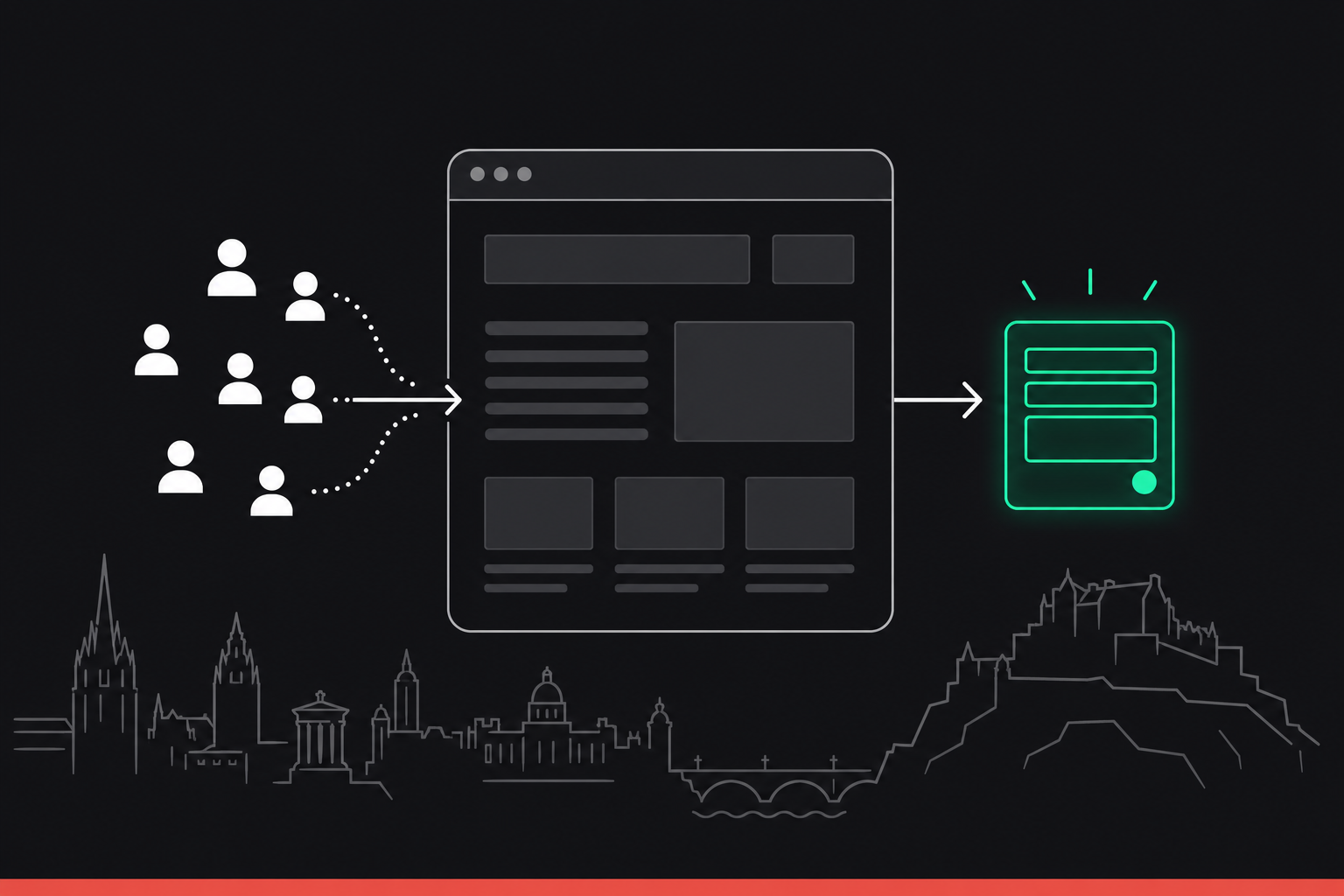
Traffic looks encouraging in an analytics report. The useful result for a service business is an enquiry from someone who understands the offer and wants to take the next step.
If people visit your website and leave without getting in touch, the page is probably making them work too hard. Here’s where I’d look first.
What website conversion rate measures
Your website conversion rate is the percentage of visitors who complete a chosen action. For a local service business, that action may be:
- sending an enquiry form
- calling the business
- requesting a quote
- buying a product
- joining an email list
The right conversion depends on the purpose of the page. A blog post may lead someone to a service page. A service page should move a suitable prospect closer to an enquiry.
This is why one site-wide figure can hide useful information. Check individual pages and traffic sources. A visitor who searched for your exact service in Edinburgh has a different level of intent from someone reading an early research article.
Why website visitors leave without enquiring
The first screen gives them no clear answer
A visitor wants to know what you do, who you do it for and whether you work in their area. They should get those answers before scrolling.
Headlines such as “Welcome to our website” waste the most prominent space on the page. A direct line such as “Commercial cleaning for offices across Edinburgh” gives the visitor something useful at once.
The first screen should have one clear next step. Give the button a meaningful label such as “Request a quote” or “Tell us about your project”. “Learn more” leaves the destination unclear.
The page talks about the business too early
Years in business, team biographies and company history can build confidence. They make more sense after the visitor can see that the service fits their needs.
Lead with the problem you solve, the service you provide and the result the client can expect. Follow that with evidence: relevant work, a detailed testimonial, recognised qualifications or a clear explanation of your process.
The offer is vague
“Bespoke solutions for every client” says very little. A prospect still has to work out what they can buy, what happens next and whether the service suits their budget.
Name the service in plain English. Explain what the work includes, who it suits and the main factors that affect price. You don’t need a fixed price list for complex work, but some guidance can stop unsuitable enquiries and reassure serious buyers.
The contact process asks for too much
A long form can feel like homework. Ask for the details needed to respond well, then collect the rest during the conversation.
For many service businesses, name, email, phone number and a short project description are enough. If a field won’t change your first reply, consider removing it.
Check the form on a phone. Labels should be clear, error messages should explain what needs fixed, and the confirmation should tell the sender when they can expect a response.
How to find where people are getting stuck
Start with the pages that receive meaningful search traffic or paid traffic. Check how many visitors reach each page and how many complete its intended action.
Then look at behaviour. Microsoft Clarity provides heatmaps and session recordings that can show repeated clicks, missed buttons and sections people never reach. Use recordings to spot patterns across several visits, rather than drawing a conclusion from one unusual session.
Test the page yourself on a real phone, using mobile data. Read every line from the visitor’s point of view. Can you answer these questions quickly?
- Is this the service I need?
- Does this business work with people like me?
- Can I trust them with the job?
- What should I do next?
Ask someone outside the business to try the same test. Familiarity makes gaps hard to see, particularly when the team already knows the terminology and process.
The changes I’d make first
Begin with one high-intent service page. Rework the opening so it names the service, audience and location. Add one clear action, then place relevant evidence close to the claims it supports.
Next, shorten the route to contact. Remove unnecessary form fields, make the phone number easy to use on mobile and explain what happens after an enquiry. Check that every button works and reaches the expected page.
Measure enquiries from that page before changing several other things at once. You need a clean comparison between the old page and the revised one. Keep any change that produces better enquiries, not just more clicks.
If you’d like an experienced second opinion, our website consultancy service looks at the pages, messaging and user route that shape enquiries. Get in touch and tell us where your site is losing people.
Frequently asked questions
What is a good website conversion rate?
There is no single rate that suits every website. The right figure depends on the service, traffic source, price and action being measured. Compare each important page against its own past performance, then judge the quality of the enquiries it produces.
How do I calculate my website conversion rate?
Divide the number of completed actions by the number of relevant visits, then multiply by 100. If a service page had 500 visits and 10 enquiry forms, its form conversion rate would be 2%.
Can more website traffic fix a low conversion rate?
Extra traffic increases the number of people who see the same page. Review the page first so visitors can understand the offer, trust the business and contact you without friction. Traffic from the wrong searches will rarely produce good enquiries.
Which page should I improve first?
Start with the service page that gets the most visits from people searching for what you sell. It has the clearest commercial intent and enough activity to make before-and-after comparisons more useful.
How long should I test website changes?
Run the test until the page has enough relevant visits and enquiries to compare fairly with its previous performance. A busy page may give a useful indication within weeks. A lower-traffic local site may need longer.

Gordon Sheppard
Article category:
