How Long Does It Actually Take to Build a WordPress Website?
If you’ve asked a web agency for a timeline and walked away more confused than when you started, you’re not alone. “It depends” is the most common answer you’ll hear, and while it’s technically true, it’s not very useful. Here’s a more honest breakdown of what actually drives the timeline.
The short answer (with real numbers)
A straightforward five-to-eight-page WordPress website for a small business typically takes six to ten weeks from first conversation to launch. A more complex site with WooCommerce, custom functionality, or a large page count can run to four to six months. Anything shorter than four weeks, for a properly built site, should raise a question about what’s being cut.
Those numbers assume a working relationship where you’re responsive. The biggest variable in any web project isn’t the agency: it’s how quickly the client can get back with content, feedback, and approvals.
Why it takes longer than most people expect
Most people picture building a website as a design job. You pick a template, plug in your logo, write some text, and you’re done. That works for a £10/month website builder account, but a properly built WordPress site is different.
Before a single page gets designed, there’s discovery: understanding your business, your audience, what you want visitors to do, how you want to rank on Google. That takes time, and skipping it produces a site that looks fine but doesn’t do what you need.
Then there’s content. Agencies can design quickly. What slows everything down is waiting for the text, photos, and information that go into the site. If you hand over finished content on day one, your project moves at a very different pace than if you’re writing pages on the fly.
Finally, feedback rounds take time. One well-structured round of feedback is manageable. Three rounds of conflicting notes from different stakeholders will add weeks to any project.
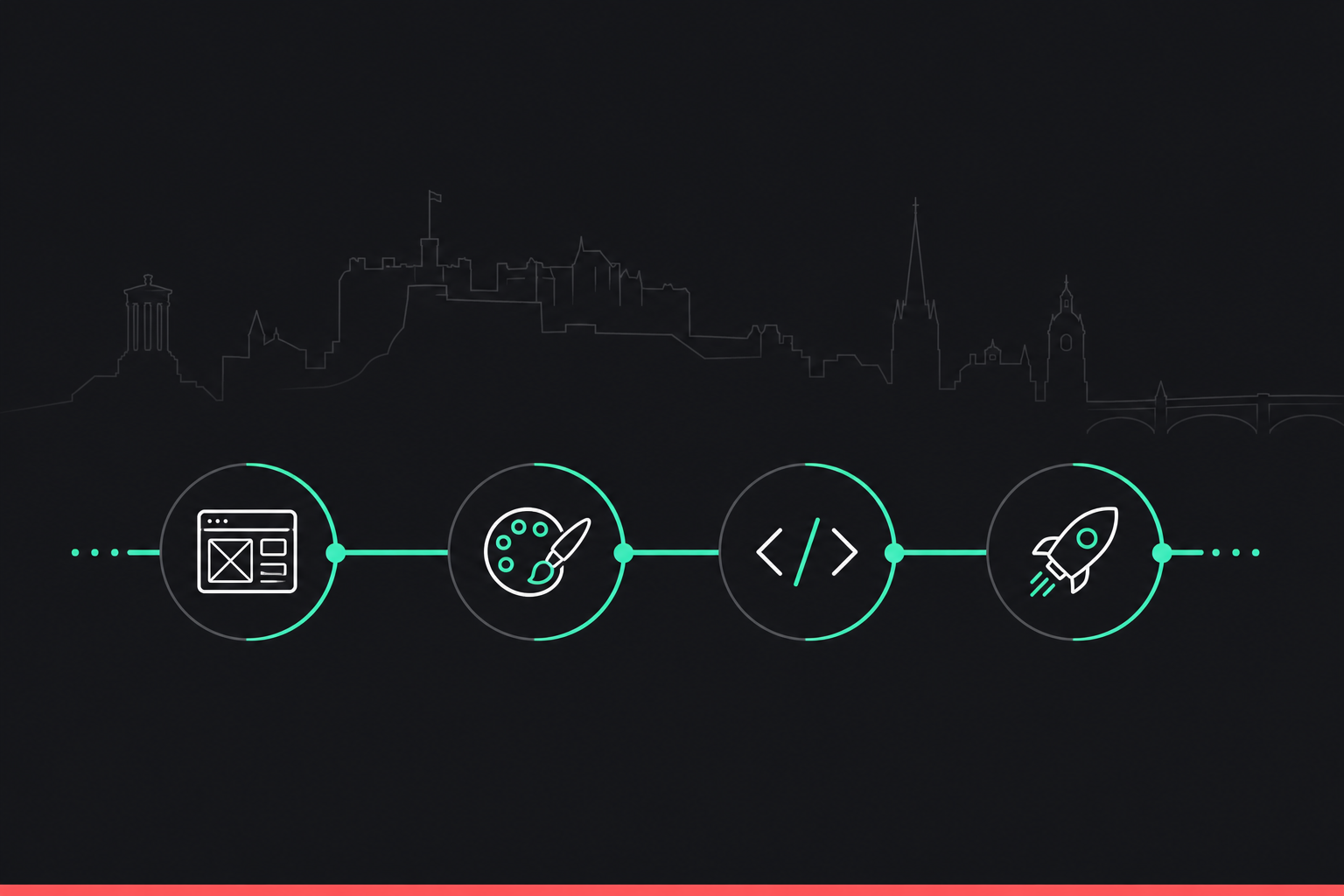
A typical WordPress build, stage by stage
Weeks 1–2: Discovery and planning
Goal-setting, sitemap, technical brief. This is where we work out what the site needs to do before anyone opens a design tool.
Weeks 3–4: Design
Homepage and interior page designs in a prototyping tool. Two rounds of feedback, then sign-off.
Weeks 5–7: Build
Development on a staging server: page templates, WordPress setup, plugin configuration, contact forms, speed optimisation.
Week 8: Content and testing
Final content goes in. Cross-browser and mobile testing. SEO basics: page titles, meta descriptions, Google Search Console connected.
Weeks 9–10: Pre-launch review and go live
We review the staging site together. Any final tweaks. DNS switched, SSL active, site live.
Some projects complete in six weeks. Others with more pages, e-commerce, or complex integrations take longer. The framework above is a baseline, not a guarantee.
What clients can do to keep things moving
The fastest web projects I’ve worked on had one thing in common: the client came prepared.
That means having your logo in a workable format, a rough idea of what pages you need, some photos (even phone photos to start), and ideally a first draft of your homepage text. You don’t need to hand over a finished content document on day one. But the more you can provide early, the less time the project spends waiting.
Feedback also matters. One person giving consolidated, clear notes is worth ten times more than five people reviewing separately and contradicting each other. If you’re a small team, decide who has sign-off authority before the project starts.
When faster timelines are possible
If you have a tight deadline, say for an event or a product launch, some agencies (including us) can prioritise your project for a faster turnaround. That usually means a reduced scope: fewer pages, a more focused design phase, content either handed over in full upfront or written by the agency. It’s worth having that conversation early rather than assuming a tight deadline is impossible.
Rush work done right is still good work. Rush work done without that conversation tends to mean something important gets cut without you realising it.
Get in touch
If you’re planning a website project and want a realistic timeline for your specific situation, get in touch. We’ll tell you what’s achievable, what drives the cost, and what you’d need to have ready before we start.
Frequently Asked Questions
How long does a basic WordPress website take to build?
A simple five-to-eight-page WordPress site typically takes six to eight weeks from kick-off to launch. That includes discovery, design, build, and testing. Timelines get longer if content isn’t ready at the start or if there are multiple rounds of feedback from different stakeholders.
Can a website be built in two weeks?
A very small site with minimal pages and content provided upfront can sometimes be built in two to three weeks. For anything more substantial, a two-week timeline usually means corners are being cut: testing, SEO setup, or structural decisions that matter once the site is live.
What causes web projects to run over schedule?
The most common causes are: content not being ready on time, feedback coming from multiple people without a single decision-maker, scope changes mid-build, and third-party dependencies like payment gateways or external API connections that take time to set up.
Does a bigger website always take longer?
A well-organised 20-page site with all content ready can sometimes be built faster than a five-page site where the client isn’t sure what they want. Page count matters, but content readiness and clarity of brief matter more.
What’s the difference between a website builder and a WordPress build in terms of time?
A website builder like Squarespace or Wix can get something online in days. A properly built WordPress site takes longer because it’s built to do more: custom design, better SEO control, more flexible content management. The time difference is real, and so is the difference in what you end up with.

Gordon Sheppard
